Consulate of Colombia AI Chatbot

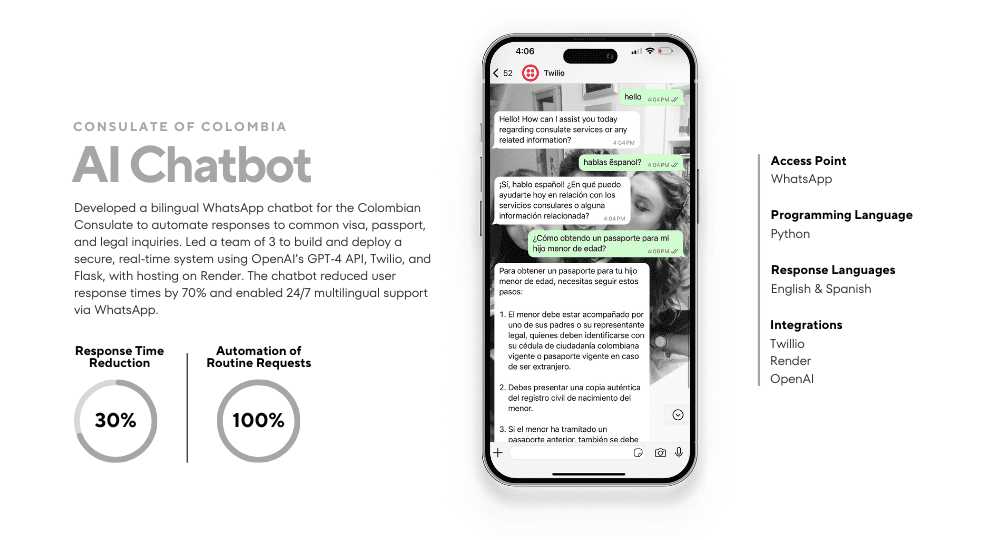
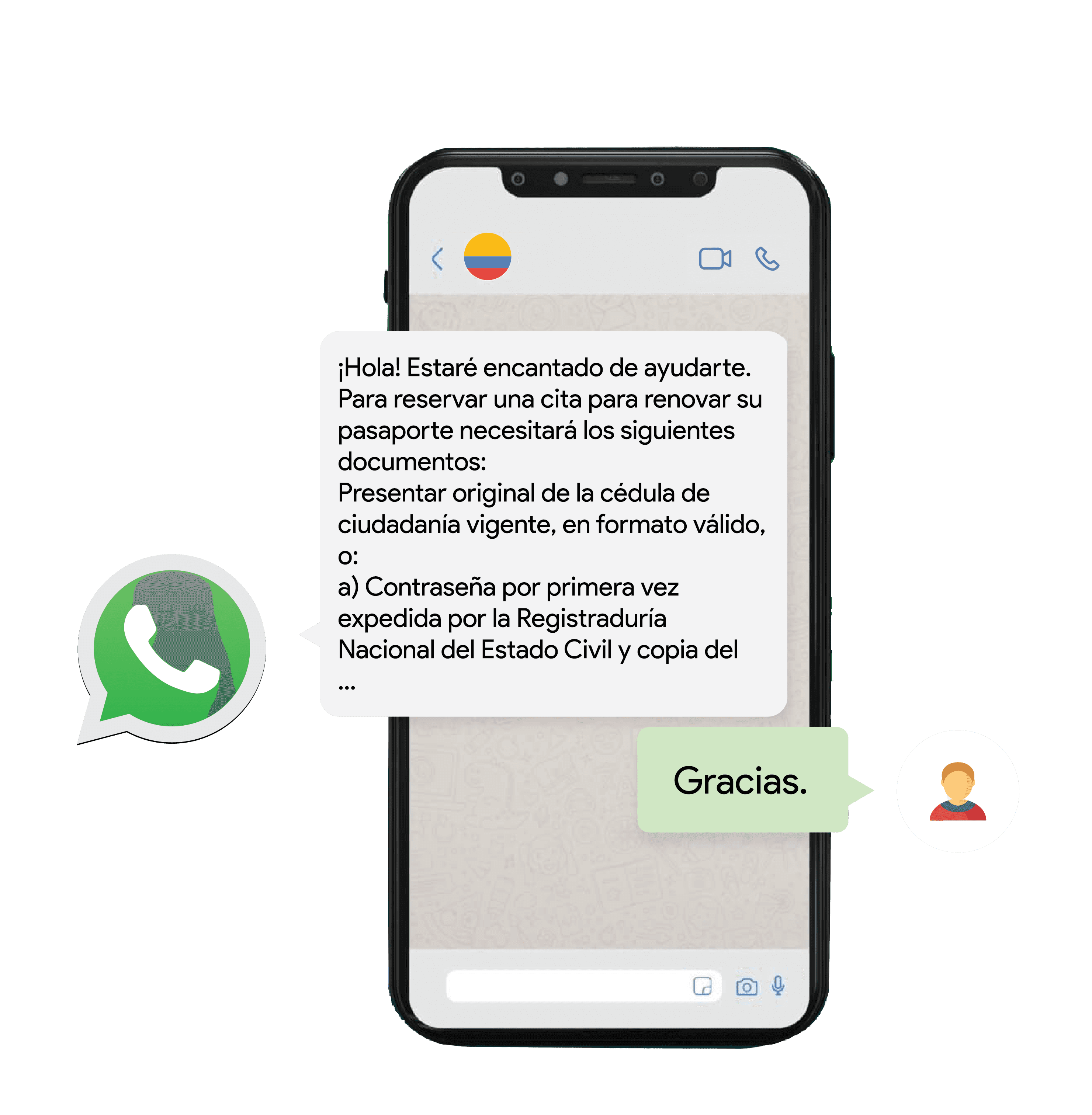
The Colombian Consulate in Chicago faced several operational bottlenecks including high call volumes, repetitive questions, and frequent errors in bookings and document preparations. We developed an AI-powered chatbot which aims to provide immediate, 24/7 assistance to users, guiding them through the appointment booking process, answering common queries, and ensuring that all necessary documents are correctly prepared prior to appointments. The bot is accessible via WhatsApp, catering to users who find complex web layouts challenging or have limited access to desktop devices, thus ensuring wider accessibility and ease of use.
Role

Role

Product Manager

Lead Developer

Product Manager

Lead Developer

Product Manager

Lead Developer

Team Size

Team Size

3 Developers

1 Manager

5 Consulate Consultants

3 Developers

1 Manager

5 Consulate Consultants

3 Developers

1 Manager

5 Consulate Consultants

Service Population

20,000+

Challenge

The Colombian Consulate, serving approximately 20,000 people annually, was facing severe operational inefficiencies due to the high volume of daily inquiries and appointment requests. Staff were overwhelmed by repetitive questions about visas, passports, and legal documentation, many of which could be answered with standardized information. Customers frequently booked incorrect appointment types or arrived unprepared without required documentation, resulting in wasted time and missed service opportunities. Additionally, the consulate needed to provide consistent, accessible support in both English and Spanish.

Results

I led a team of 3 to develop and launch a fully functional bilingual chatbot for consular services, using OpenAI’s GPT-4 API for real-time interactions. We achieved a 30% reduction in user response times and automated 100% of routine information requests. I implemented secure hosting on Render, streamlined Twilio integration, and documented the entire technical workflow for maintainability. The chatbot was successfully tested in WhatsApp’s sandbox, ensuring a scalable and resilient user experience across platforms.

Additionally, we provided hands-on training for consulate members to ensure a level of understanding necessary for on-going maintenance and minimal service disruption.
Process

Needs Assessment & Stakeholder Interviews: We met with consular staff to understand operational pain points, including appointment overload, repeated inquiries, and language accessibility challenges. Through these discussions, we identified a need for an automated system to handle FAQs, reduce appointment errors, and assist bilingual users.


System Architecture & API Planning: Based on the consulate’s needs, we designed a backend architecture using Flask and integrated the OpenAI API for conversational logic. We also planned Twilio’s WhatsApp API integration to meet users where they already communicate.


Prototyping & Testing (Sandbox): We deployed the chatbot to a sandbox environment using Twilio’s WhatsApp test interface. This allowed us to simulate real interactions, troubleshoot response flows, and iterate based on user behavior, including multilingual testing.


Usability Testing: We conducted usability tests with a diverse group of users to validate the design and identify areas for improvement. Based on the feedback, we made necessary adjustments to the design.


Deployment & Integration: We hosted the system on Render for reliability and scalability. We configured webhook routing to handle inbound messages and deliver responses in real time, reducing response latency and minimizing staff workload.


Documentation & Handoff: We developed a full implementation guide, including setup instructions, emergency protocols, and alternative hosting options. This ensured the consulate team could independently manage and scale the system post-launch.

Needs Assessment & Stakeholder Interviews: We met with consular staff to understand operational pain points, including appointment overload, repeated inquiries, and language accessibility challenges. Through these discussions, we identified a need for an automated system to handle FAQs, reduce appointment errors, and assist bilingual users.


System Architecture & API Planning: Based on the consulate’s needs, we designed a backend architecture using Flask and integrated the OpenAI API for conversational logic. We also planned Twilio’s WhatsApp API integration to meet users where they already communicate.


Prototyping & Testing (Sandbox): We deployed the chatbot to a sandbox environment using Twilio’s WhatsApp test interface. This allowed us to simulate real interactions, troubleshoot response flows, and iterate based on user behavior, including multilingual testing.


Usability Testing: We conducted usability tests with a diverse group of users to validate the design and identify areas for improvement. Based on the feedback, we made necessary adjustments to the design.


Deployment & Integration: We hosted the system on Render for reliability and scalability. We configured webhook routing to handle inbound messages and deliver responses in real time, reducing response latency and minimizing staff workload.


Documentation & Handoff: We developed a full implementation guide, including setup instructions, emergency protocols, and alternative hosting options. This ensured the consulate team could independently manage and scale the system post-launch.