Senior Capstone — designer & full-stack developer
Body of Play
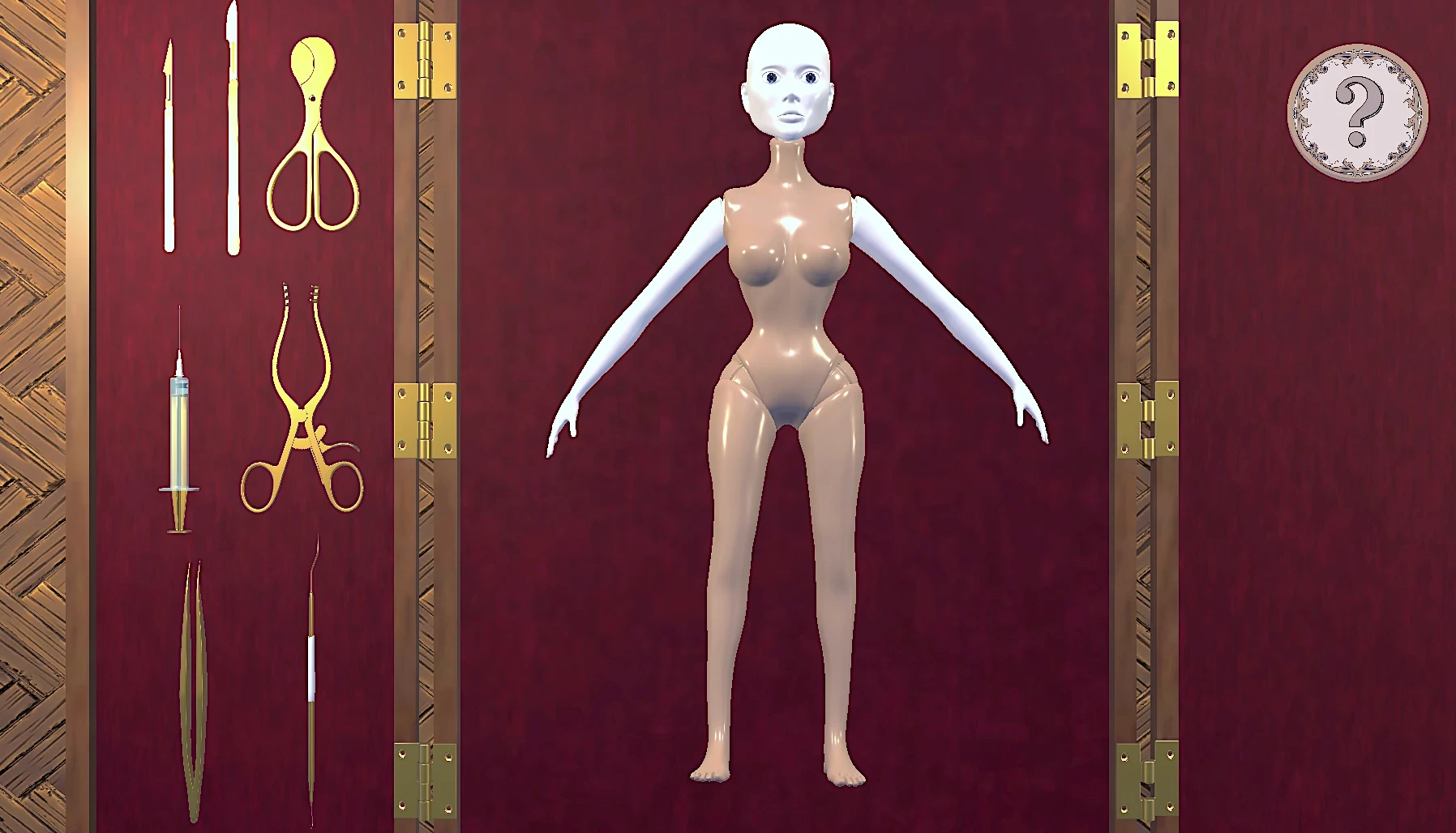
Players sift through drawers of disassembled doll parts — eyes, faces, torsos, limbs — selecting and assembling them in a work area. The interaction interrogates the ease with which we explore, manipulate and impose expectations on the female body.
Role
Designer, 3D Designer & Animator, Full-Stack Experience Developer
Tools
Unity
Blender
ZBrush
C#
Adobe Illustrator
Critical Design

Ritual
assembly paced as tactile ceremony
Unity3D
desktop experience, built end to end
Ethos — 01
Delight and discipline in the same object
This project was my senior capstone. It explores doll play as both a site of joyful self-expression and a conduit for internalised ideals. Dolls like Barbie often function as talismans in early girlhood; objects through which aspirations, expectations, and identity are projected and performed. They provide a physical grounding for the ways young bodies are imagined, scrutinized, and shaped by society. Yet, they are also powerful tools for self-determination, storytelling, and imaginative exploration.
Body of Play does not critique dolls themselves. It stages an inquiry into how these emblems of play can simultaneously embody delight and discipline. Making the mechanics of customisation and the aesthetic logic of assembly visible is what prompts reflection on the dual nature of childhood play.
The register is borrowed from vintage dollhouses and curiosity cabinets: Art Deco geometry, antique textures, and the unsettling whimsy of Coraline. Custom easing curves make the motion feel both magical and mechanical, deliberate, weighted, and just slightly off. Charm and unease share a surface, which is how the inquiry stays an invitation rather than an accusation.
What does it mean to play with dolls? What does it mean to aspire and engage in imaginative play?


Video — 07
Photos
- modify
- modify
- modify
- modify
Photos
Process — 02
Read it, map it, then build
What the piece required, in the order it required it, and why critical reading had to come before any of the making.
01
Read the doll before designing it
I started with a deep dive into the cultural history of dolls and doll houses through feminist media theory, historical advertisements, and academic texts on the objectification and idealisation of female bodies. That reading is what establishes delight and discipline as two faces of one object and it's the claim the whole piece rests on.
02
Map the interaction, model the parts
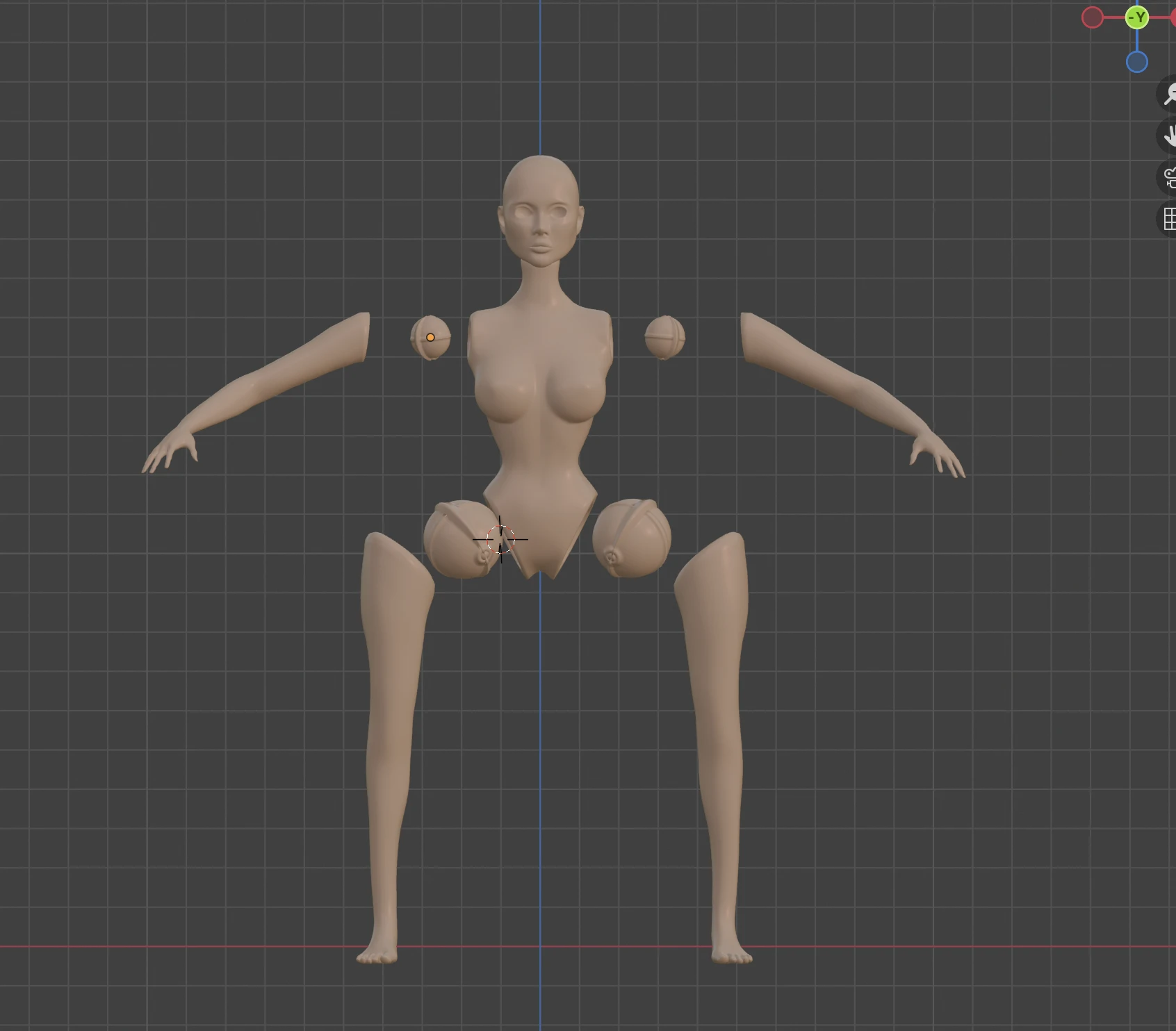
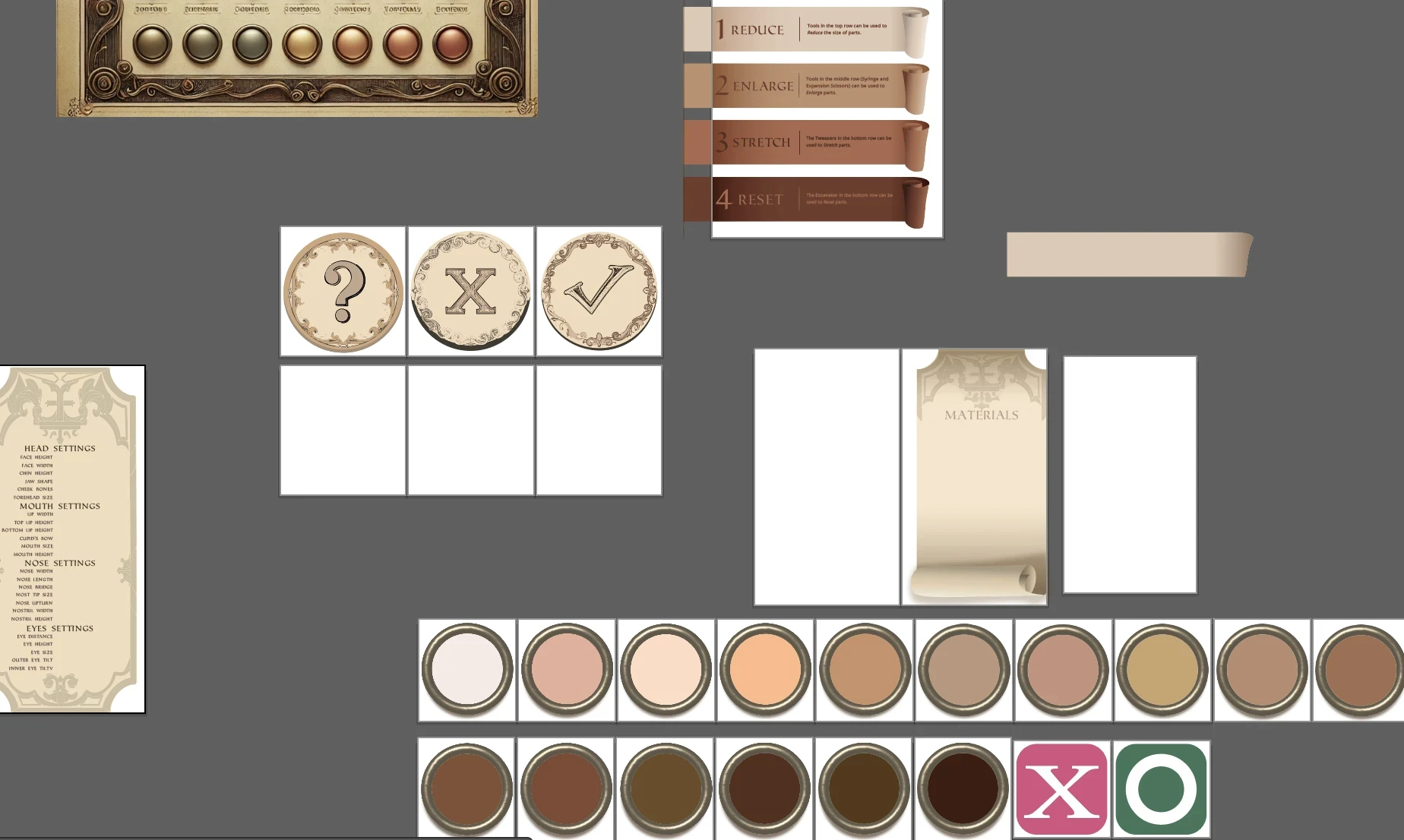
Detailed wireframes and interaction flows balanced intuitive play against thematic resonance, with the drawer system mapped to replicate the physicality of antique furniture. Every body part was modelled in Blender with stylised realism — evoking vintage and modern doll proportions at once, carrying subtle distortions, with materials designed to feel aged or over-articulated.
03
Build it, then tune how it feels
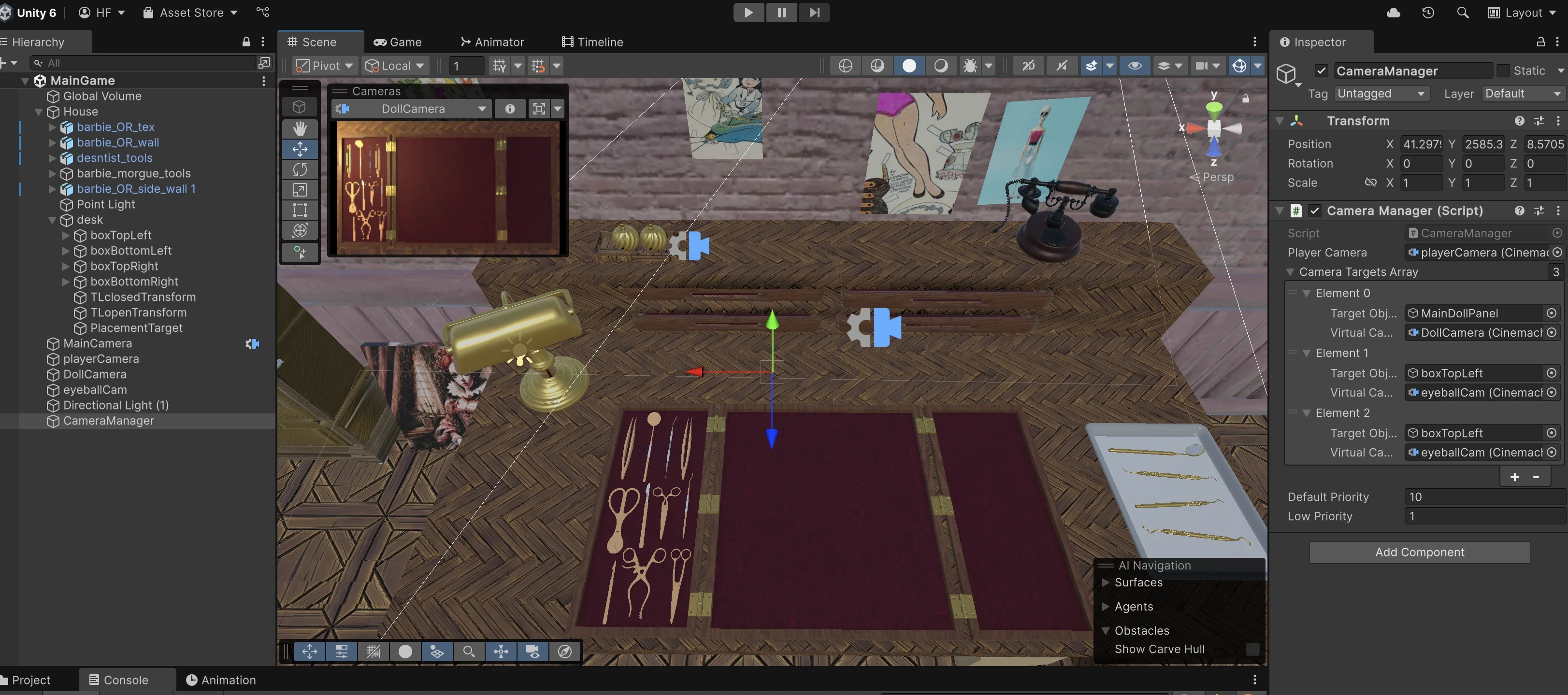
A modular assembly system of prefabs, scriptable objects and custom state logic, with raycasting driving selection and custom interpolation functions driving the motion. Shader Graph handles glow pulses and environmental shading. Early mockups were then tested for usability and tone, and refined on interaction pacing, hover behaviour and part categorisation.
What I made — 03
Researched, modelled and programmed alone
+
Feminist media research
Interface & interaction mapping
3D modelling & asset creation
Unity development & scripting
Prototyping & iteration
+
Feminist media research
Stack
Unity · Blender · ZBrush · C# · Illustrator
Findings — 04
What the work returned
Making the mechanics of customisation visible does more than an argument about them would — the player performs the logic before they notice it.
Ritual
pacing as the carrier of the argument
Modular
prefab and state-logic assembly system
Deco
charm and unease on one surface
Learning — 05
What I would carry forward
Put the argument in the material
Antique textures, Art Deco geometry and a cabinet do more persuading than any line of copy. When the aesthetic carries the inquiry, the player arrives at it themselves instead of being told.
Pacing is the hardest thing to iterate
Geometry and shaders can be judged from a screenshot. Interaction pacing and hover behaviour can only be judged by playing it repeatedly — which is why they were the last things to settle and the ones testing changed most.
Next case study
Consular Assistant
Harriet Fisher
Made with love.